How to Hang Drapes on a Large Wall With Glass Sliders
How to Hang Drapes on a Large Wall With Glass Sliders
A room-by-room guide to dressing sliding glass doors with style, privacy, and purpose
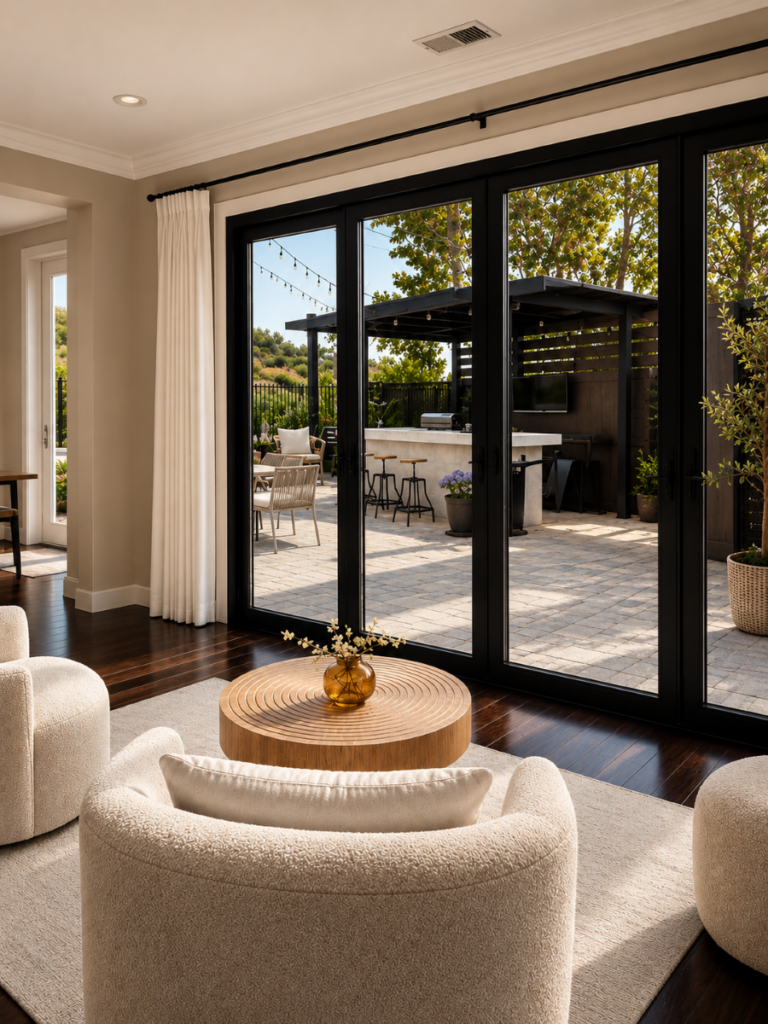
The pinch pleat panels stacked neatly to the side — keeping the full view open during the day.
Few design decisions feel as loaded as dressing sliding glass doors on a large wall — especially in the family room, where those patio door openings blur the line between indoor comfort and outdoor living. Get it right and you unlock effortless light control, elegant privacy control, and a frame worthy of your outdoor entertaining space. Get it wrong and the whole room feels unfinished, even with beautiful furniture in place.
Whether you’re working with design architects on new construction, consulting interior designers for a full renovation, or simply refreshing the space yourself, this guide walks you through every step of the decision-making process — from heading style to the proportionate width of curtains — so your sliding glass door curtains become the most functional and beautiful element in the room.
Step 1: Understand the room’s purpose before anything else
Before you touch a curtain rod, clarify what the space actually needs. The overall design story of the room drives every choice downstream. A family room needs highly functional window treatments that stand up to daily life. A more formal space calls for a presentable look — something the most pretty drapery style can deliver without sacrificing function.
Ask yourself: Is natural light the priority, or do you need deep blackout capacity? Is the patio door in a high-traffic corridor? These answers shape every next step in the styling process.
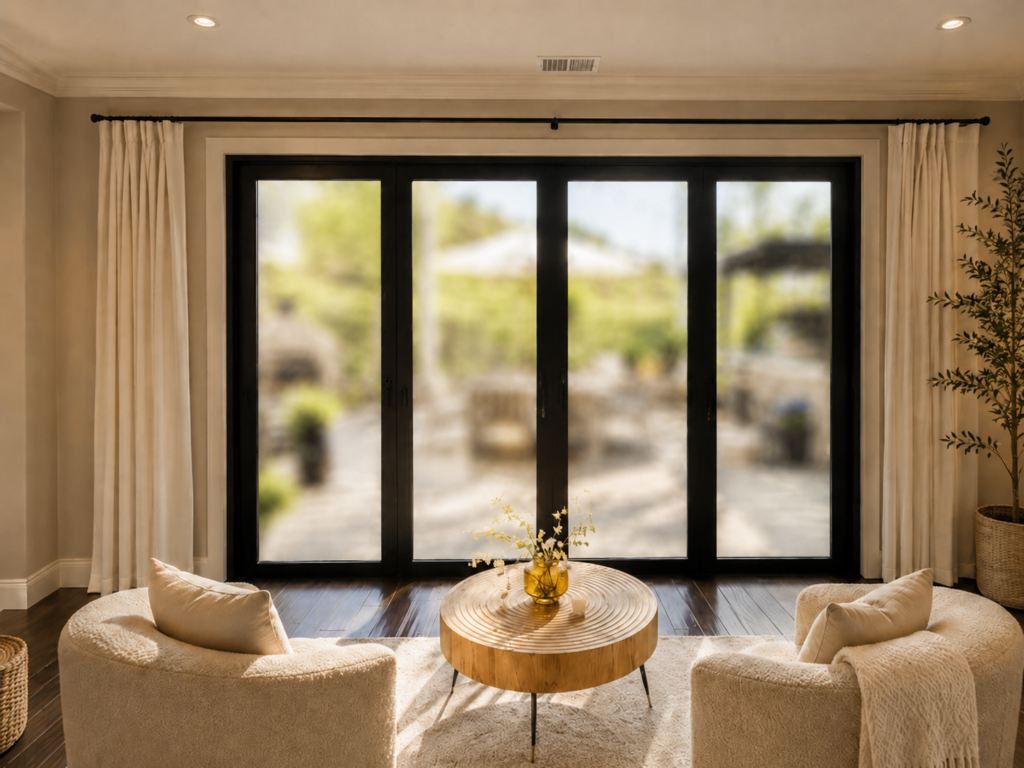
Our great room looking out to the backyard — the view that started it all.
Step 2: Choose the right heading style for large windows
Heading style is the most impactful detail of the drapery, and large windows demand that you think carefully here. There are four main camps:
| Heading Style | Best For | Things to Know |
|---|---|---|
| Grommet tops | Contemporary family rooms, casual patio door spaces | Easy to slide open — great for door openings with heavy daily use |
| Flat panel tops | Minimalist or architectural spaces | Loved by building designers for their clean line |
| Tie tops | Relaxed, coastal, or bohemian decor style | Soft and casual — best with mirrors, rugs, and natural textures |
| Pinch pleat ← our pick | Traditional, transitional, or elevated rooms | Adds wonderful architectural structure — pairs beautifully with black frames and ceiling lighting |
Step 3: Determine the curtain rod placement for maximum impact
Installing the curtain rod is where most people make a costly mistake. For a large wall with sliding doors, the rod must extend well beyond the side of the doors — at least 12 to 16 inches on each side. This allows the curtain panels to stack completely clear of the door frame when open, and visually expands the space to make the window feel intentional and grand.
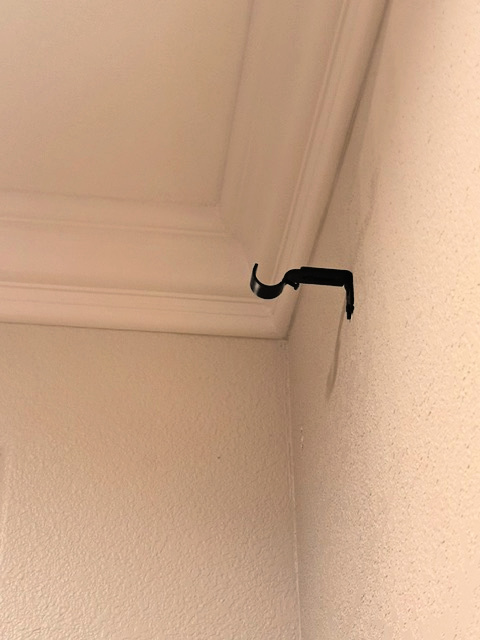
Mount the rod as close to the ceiling as possible — or even on the ceiling itself for a true floor-to-ceiling drama effect. Interior designers consistently recommend this because it draws the eye upward and makes the room feel taller.
Mount rod 4–6 inches above the door frame, or flush to the ceiling for a dramatic effect.
Rod should extend 12–16 inches past the door frame on each side of the doors.
Panels should puddle or just kiss the floor — never hover above it on a large wall.
Aim for 2–2.5× the rod width in total fabric for a full, luxurious look.
Exactly What We Used
Everything linked is something we actually own and love. Tap any product to shop on Amazon.
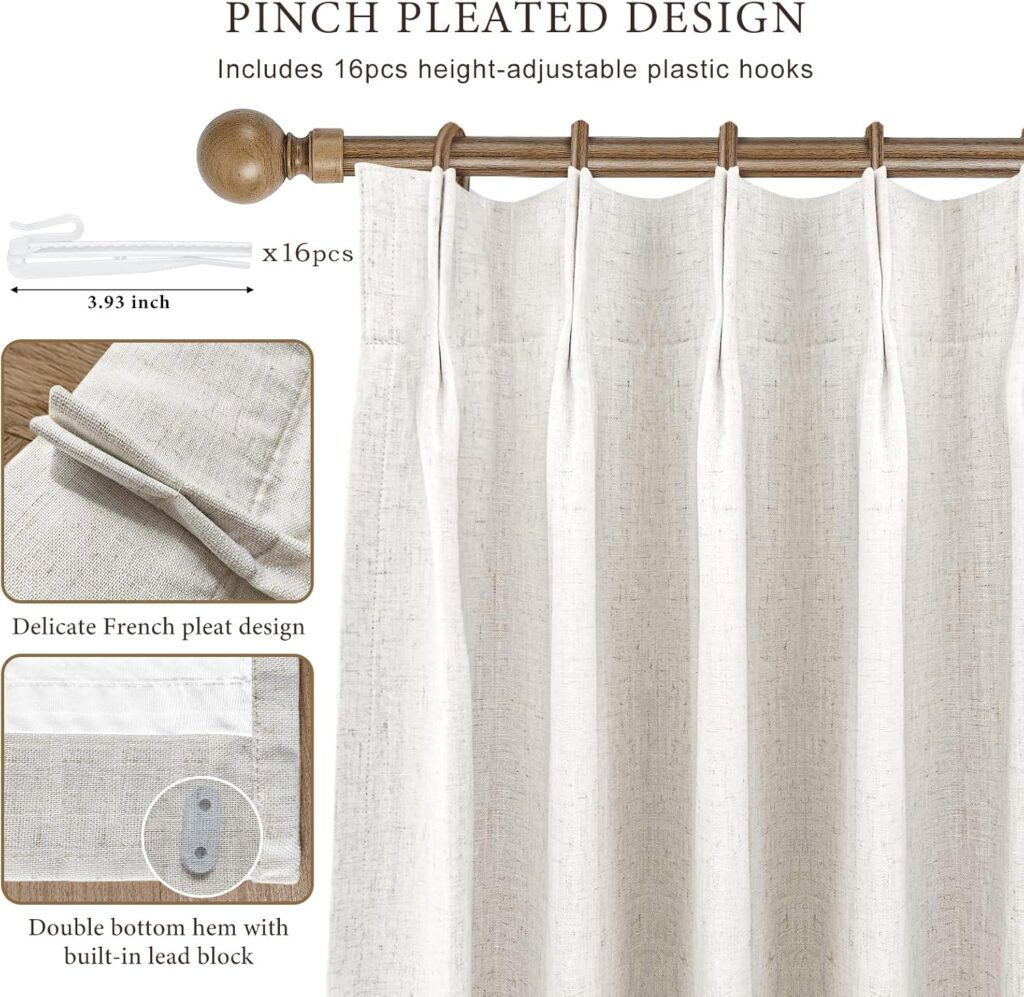
Natural Pinch Pleated 100% Blackout Linen Curtains
The exact panels in our home — 95″ length, beautiful linen texture, fully blackout lined. French pleat design with hooks included. Perfect for large sliding glass doors.
Shop on Amazon →
Matte Black Curtain Rod
Sleek, sturdy, and easy to install. The matte black finish ties perfectly into our black door frames and elevates the whole look. Available in multiple lengths.
Shop on Amazon →Step 4: Select the right fabric — sheer, blackout, or layered
The fabric decision sits at the heart of your functional needs. A layered approach solves most situations elegantly: sheer curtains in the day filter natural light without blocking views; a heavier blackout panel adds full privacy control and light blocking when needed.
For our space, we went straight to blackout linen. The trail behind our property meant we needed real privacy at night — and the linen texture keeps it from feeling heavy or dark during the day. The natural, warm tone also complements the black door frames beautifully.
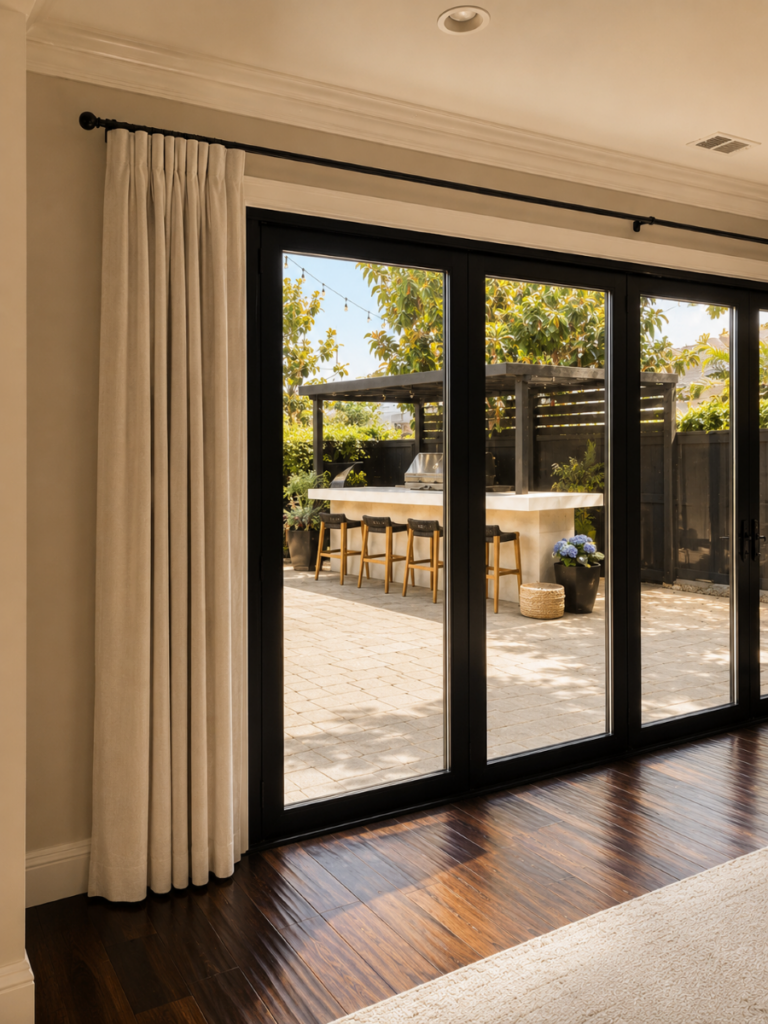
The natural linen texture — soft enough to feel relaxed, structured enough to look polished.
Step 5: Consider alternatives on the side of the doors
Dressing sliding glass doors doesn’t always mean curtains alone. Vertical blinds have long been the workhorse solution for patio door light control — practical for door openings with daily use. For homeowners who want a more curated look, vertical blinds can be combined with soft panels on the outer sides for the best of both worlds.
Room dividers can also create a visual boundary between the family room and patio-adjacent zones without blocking the slider itself.
Layering in an olive tree beside the drapes adds organic texture and depth to the corner.
Step 6: Get the proportionate width of curtains right
This is the step most people skip — and the one that separates a presentable look from a truly polished result. The proportionate width of curtains on a large wall must account for the full rod width, not just the door frame width. When the panels are closed, they should look lush and full. When open, they should stack gracefully without blocking the door opening.
A good rule: measure your rod length, then multiply by 2 to 2.5 for the total fabric width you need. Divide that by the number of curtain panels you’re using.
Include the rod extensions beyond each side of the doors, not just the door frame width.
Aim for 2–2.5× the rod length in total fabric. Less looks flat; more looks luxurious.
For sliding glass doors, 4 panels (two per side) creates the most balanced, symmetrical look.
Make sure stacked panels don’t obstruct the door opening — especially important for daily use spaces.
Step 7: Tie it into the overall design story of the room
Dressing sliding glass doors is about the window treatment — but finishing the room is about harmony. The curtain color, texture, and style should speak to every other element: the area rugs, accent chairs, mirrors, and even the outdoor furniture visible through the glass. That continuity is what transforms a nice room into a cohesive space that feels designed rather than assembled.
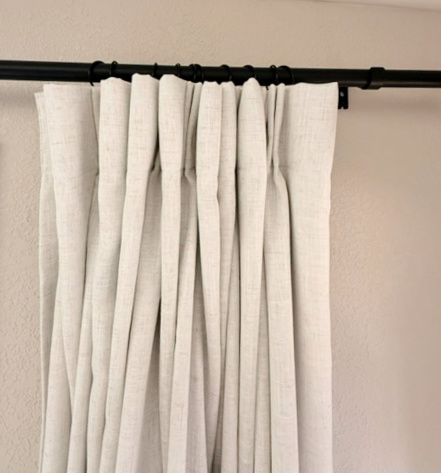
For us, the natural linen tone was chosen to complement the warm wood floors, the cream furniture, and the greenery outside. Everything speaks the same quiet, organic language — and the black rod ties it all back to the black door frames. It’s a small detail that makes a big impact.
The full picture — drapes framing the view, outdoor space beyond, everything connected.
Quick style guide: matching decor style to drapery choice
Not sure where to start? Use your existing furniture as a guide. If your family room features a traditional arrangement with lamps and chandeliers, a pinch-pleat panel in neutral linen feels right at home — which is exactly what we went with. If you’re more minimalist with clean-lined sectionals and sleek furniture, flat panel tops in a heavyweight cotton or velvet speak your language. Coastal rooms with rattan and area rugs call for airy tie tops in white or natural fabric.
For rooms with black door frames, stone countertops, or dark hardware visible through the glass, pick curtain panels that either echo or intentionally contrast those elements. Our natural linen against the black frames creates a beautiful contrast that feels both warm and contemporary.
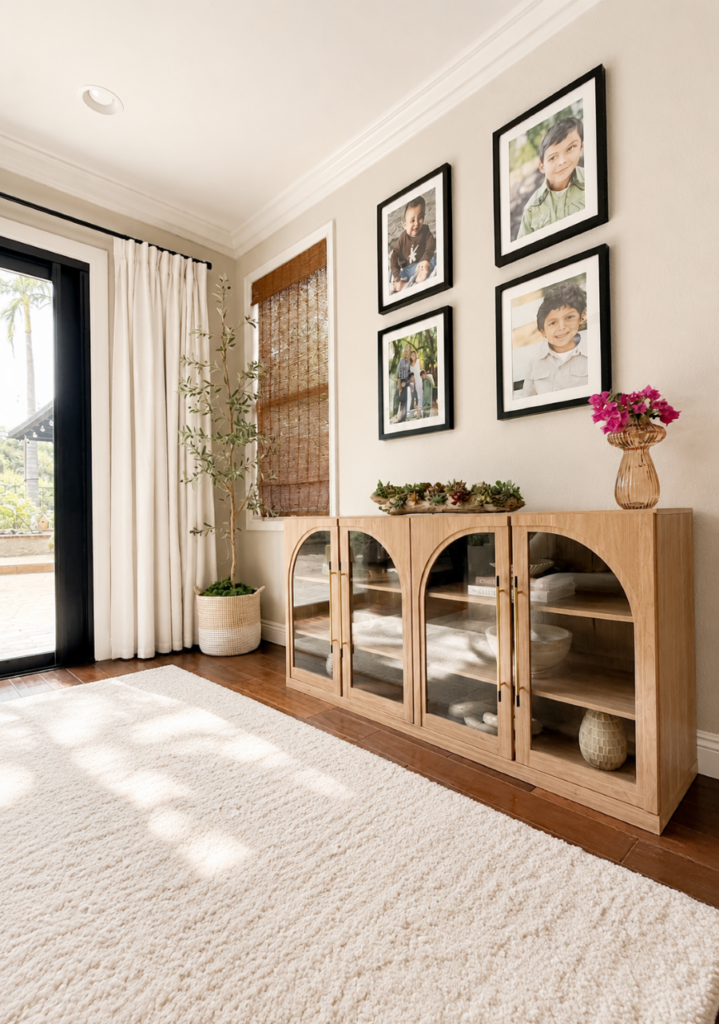
The great room coming together — slowly but surely! 🤍
Ready to transform your sliding glass doors?
Shop everything we used — the linen blackout panels, the black curtain rod, and all our other home favorites in one place.
Shop My Amazon Storefront →